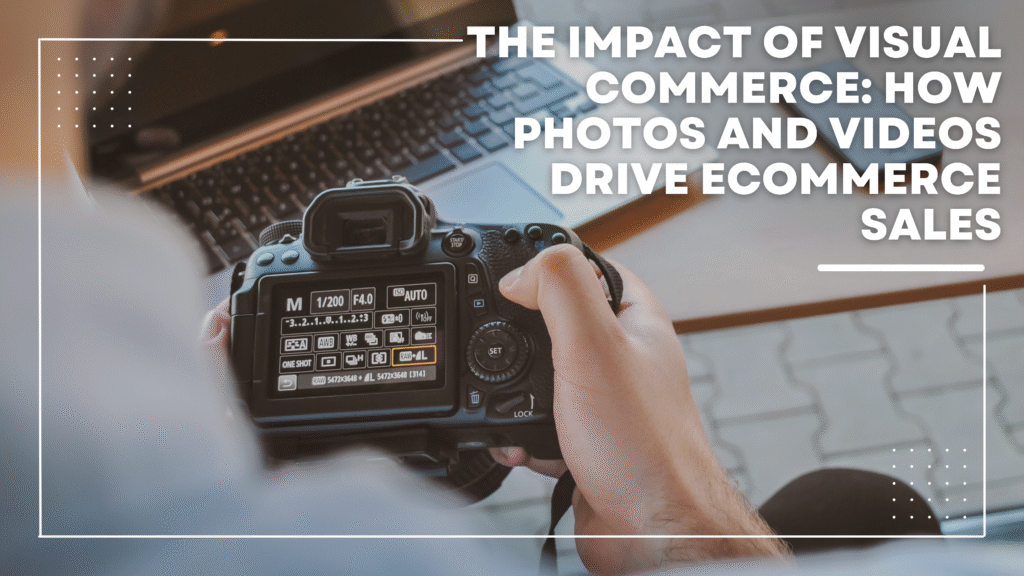
In today’s visually-driven world, visual commerce has become an essential tool for eCommerce businesses to boost engagement and increase conversions. High-quality product images, videos, and interactive experiences can significantly enhance the online shopping experience, allowing customers to make informed purchase decisions. Whether it’s through detailed product photography, engaging product videos, or virtual try-ons, visual content plays a crucial role in building trust, showcasing product quality, and reducing uncertainties about online purchases.
At MarkCommerce, we understand that creating a captivating visual experience can differentiate your store from competitors, improve customer retention, and ultimately increase your sales. In this blog, we’ll explore how investing in visual commerce strategies can drive results and why it’s important for eCommerce businesses today.
Why Visual Content Matters for eCommerce?
In an online shopping environment, customers can’t physically touch, feel, or try products before purchasing. This makes them highly dependent on visual content to gauge product quality and make purchasing decisions. Studies show that product images and videos are the top factors influencing a customer’s decision to buy online.
1. Builds Trust and Credibility
High-quality images and videos can build trust by providing a clearer representation of your product. They help customers see the details, colors, and features that might otherwise be overlooked. By showing products from multiple angles and close-ups, you reassure customers that they’re getting exactly what they expect.
2. Increases Engagement and Dwell Time
Visitors are more likely to engage with your website if it features visually appealing content. This results in increased time spent on your site (dwell time) and a higher chance of conversion. Engaging visuals can reduce bounce rates and create a more immersive shopping experience.
3. Reduces Returns and Uncertainty
One of the major challenges of online shopping is the inability to touch or try the product before purchase. By providing clear visuals that accurately depict the product, you help customers make more confident decisions. This reduces the likelihood of returns due to misleading product expectations.
Types of Visual Content to Enhance eCommerce Sales
1. High-Quality Product Photography
Product photography is arguably the most essential visual element of your eCommerce store. When customers can see your product in high detail, they can assess its quality and suitability for their needs. Product photos should highlight key features, such as texture, size, color, and functionality.
Best Practices for Product Photography:
- Multiple Angles: Show your product from various angles to give a well-rounded view of it.
- Zoom-In Functionality: Allow customers to zoom in on images to inspect the product in detail.
- White Backgrounds: Use simple backgrounds to ensure the product remains the focal point.
- Consistent Lighting: Use proper lighting to avoid shadows and enhance the product’s true colors.
By consistently using high-quality product photography, you can improve the overall aesthetic of your website and create a more professional impression.
2. Product Videos
Product videos have proven to be incredibly effective in driving conversions and improving engagement. Videos allow you to demonstrate how a product works, highlight its unique features, and show it in use. This is particularly valuable for products that have intricate details or are complex in nature.
How Product Videos Boost Sales:
- Demonstrate Product Usage: Show how the product solves a problem or enhances the customer’s life.
- Create Emotional Connections: Use video to tell a story and connect with your audience emotionally.
- Address Common Questions: Answer frequently asked questions or address common customer concerns through video content.
Videos increase customer trust by providing an additional layer of understanding. They also make it easier for customers to visualize themselves using the product, thus improving their likelihood of purchase.
3. Virtual Try-Ons and Augmented Reality (AR)
One of the most revolutionary advancements in visual commerce is the use of augmented reality (AR) for virtual try-ons. This technology allows customers to virtually “try” products such as clothing, accessories, and makeup before buying. It can even be used for home décor or furniture stores, letting customers see how products fit within their own living spaces.
Benefits of Virtual Try-Ons and AR:
- Enhanced Shopping Experience: Customers can see how products look on them or in their homes, making them feel more confident in their purchase decisions.
- Reduced Return Rates: Since customers can visualize the product better, they are less likely to return items due to size or suitability issues.
- Interactive Engagement: AR features engage users in a more interactive and fun way, creating memorable shopping experiences.
Incorporating AR into your eCommerce store can make your site stand out and provide an innovative shopping experience for customers.
4. User-Generated Content (UGC)
Customer reviews, ratings, and user-generated photos or videos (UGC) are powerful tools in visual commerce. UGC adds an element of authenticity and social proof that photos and descriptions alone can’t provide.
Why UGC Matters:
- Builds Trust: Seeing real customers using your products provides social proof and builds credibility.
- Encourages Interaction: Customers who share their photos and videos are more likely to feel connected to your brand.
- Relatable: UGC is often seen as more relatable and trustworthy than professionally taken images.
Encourage your customers to share their photos or videos using your products and feature them prominently on your product pages or social media channels.
Optimizing Visual Content for Conversions
The visual aspect of your eCommerce store is only effective if it’s optimized for user experience and search engines. Here’s how you can make sure your visual content works effectively for SEO and conversion:
1. Optimize Image Size and Speed
Images and videos that are too large can slow down your website, leading to longer load times and higher bounce rates. Optimize images and videos for faster load times without sacrificing quality. Tools like JPEGoptim or TinyPNG can help reduce image sizes.
2. Use Alt Text and Descriptions for SEO
For SEO purposes, ensure that all your images have descriptive alt text and captions. This helps search engines understand what the image is about and can improve your site’s visibility in image searches.
3. Mobile-Friendly Visuals
With mobile commerce on the rise, ensure that your visual content is responsive and looks good on all devices. Optimize images and videos for mobile users to enhance the shopping experience.
Conclusion
Visual commerce has become a crucial part of the eCommerce landscape, enabling businesses to improve customer engagement, reduce return rates, and ultimately increase sales. By using high-quality product images, videos, virtual try-ons, and user-generated content, you create a more immersive and trustworthy shopping experience for your customers.
At MarkCommerce, we specialize in helping eCommerce businesses optimize their websites for visual content, making it easier for customers to make confident purchase decisions. Whether you’re looking to improve your product photography or integrate augmented reality, we can guide you through the process and help you create an impactful online presence that drives conversions.

Recent Comments